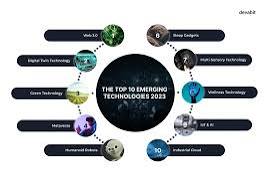
1. Artificial Intelligence and Machine Learning
Generative AI: Tools like GPT (which I am based on) are evolving to create more sophisticated content, from text to images, code, and even videos. AI is becoming more integrated into creative processes, enhancing productivity and personalizing user experiences.
AI in Healthcare: AI is being used to develop more accurate diagnostic tools, personalized treatment plans, and even robotic surgeries. AI-driven drug discovery is accelerating the development of new medications.
2. Quantum Computing
Computational Power: Quantum computers have the potential to solve complex problems that are currently unsolvable with classical computers. This could revolutionize fields like cryptography, materials science, and complex system simulations.
Commercialization: Companies like IBM, Google, and Microsoft are making strides in quantum computing, with the possibility of practical applications becoming a reality in the near future.
3. 5G and Beyond
Network Speed and Connectivity: The rollout of 5G is increasing network speeds, reducing latency, and enabling new applications like autonomous vehicles, smart cities, and advanced IoT devices. The next step, 6G, is expected to push these capabilities even further.
Impact on Industries: 5G is set to transform industries like manufacturing, logistics, and healthcare by enabling real-time data processing, automation, and remote operations.
4. Metaverse and Extended Reality (XR)
Virtual and Augmented Reality: The metaverse, a collective virtual shared space, is becoming more tangible with advancements in VR, AR, and MR (Mixed Reality). Companies like Meta (formerly Facebook) and Apple are investing heavily in creating immersive digital environments for work, play, and social interaction.
Digital Twins: In industrial applications, digital twins—virtual replicas of physical objects—are being used to optimize processes, predict outcomes, and enhance product design.
5. Blockchain and Decentralized Technologies
Decentralized Finance (DeFi): Blockchain is revolutionizing finance by enabling decentralized applications (dApps) and smart contracts that operate without intermediaries, offering greater transparency and security.
Non-Fungible Tokens (NFTs): NFTs are creating new ways to own and trade digital assets, impacting industries such as art, music, gaming, and even real estate.
6. Sustainable Technologies
Green Energy Innovations: Advances in renewable energy technologies like solar, wind, and energy storage are making sustainable energy more accessible and affordable. Innovations like solid-state batteries and hydrogen fuel cells are poised to make significant contributions.
Carbon Capture and Circular Economy: Technologies that capture and reuse carbon emissions, along with innovations in recycling and sustainable materials, are critical in the fight against climate change.
7. Biotechnology and Genetic Engineering
CRISPR and Gene Editing: CRISPR technology is enabling precise edits to DNA, opening the door to new treatments for genetic disorders, improved agricultural practices, and potentially, the eradication of certain diseases.
Synthetic Biology: Advances in synthetic biology are leading to the creation of new organisms designed to perform specific tasks, such as producing biofuels, cleaning up pollution, or even manufacturing new materials.
8. Autonomous Systems and Robotics
Self-Driving Vehicles: Autonomous vehicles are becoming more sophisticated, with potential applications in transportation, logistics, and delivery services. Companies like Tesla, Waymo, and Uber are at the forefront of this innovation.
Robotics in Industry and Service: Robotics is expanding beyond manufacturing into service industries, healthcare, and even household applications, with robots performing tasks ranging from surgery to cleaning.
9. Edge Computing and IoT
Data Processing at the Edge: As the Internet of Things (IoT) continues to grow, edge computing is becoming more important. Processing data closer to where it is generated reduces latency, improves efficiency, and enables real-time decision-making.
Smart Devices Everywhere: IoT devices are becoming more integrated into our daily lives, from smart homes and wearables to industrial IoT applications that monitor and optimize complex systems.
10. Cybersecurity Innovations
Zero Trust Architecture: As cyber threats become more sophisticated, the zero-trust model, which assumes that threats could be both outside and inside the network, is gaining traction. This approach enhances security by continuously validating access requests.
AI in Cybersecurity: AI is being used to detect and respond to cyber threats in real-time, improving the ability to identify patterns, predict attacks, and mitigate risks.
These trends highlight the convergence of multiple technologies, creating new possibilities and challenges. Keeping an eye on these developments will be crucial for businesses, governments, and individuals as they navigate the future.